At Calvary, your child will benefit from a rigorous curriculum that reinforces critical thinking, while experiencing Christian values woven throughout the curriculum. We want to help each child reach their fullest potential in all areas of their lives; in their minds, hearts, and lives of service.
Calvary Day School is proud to be ranked #1 in Best Christian K-12 Schools in the Savannah Area by Niche.com.
Each one should use whatever gift he has received to serve others.
1 Peter 4:10
Lower School Student Experience
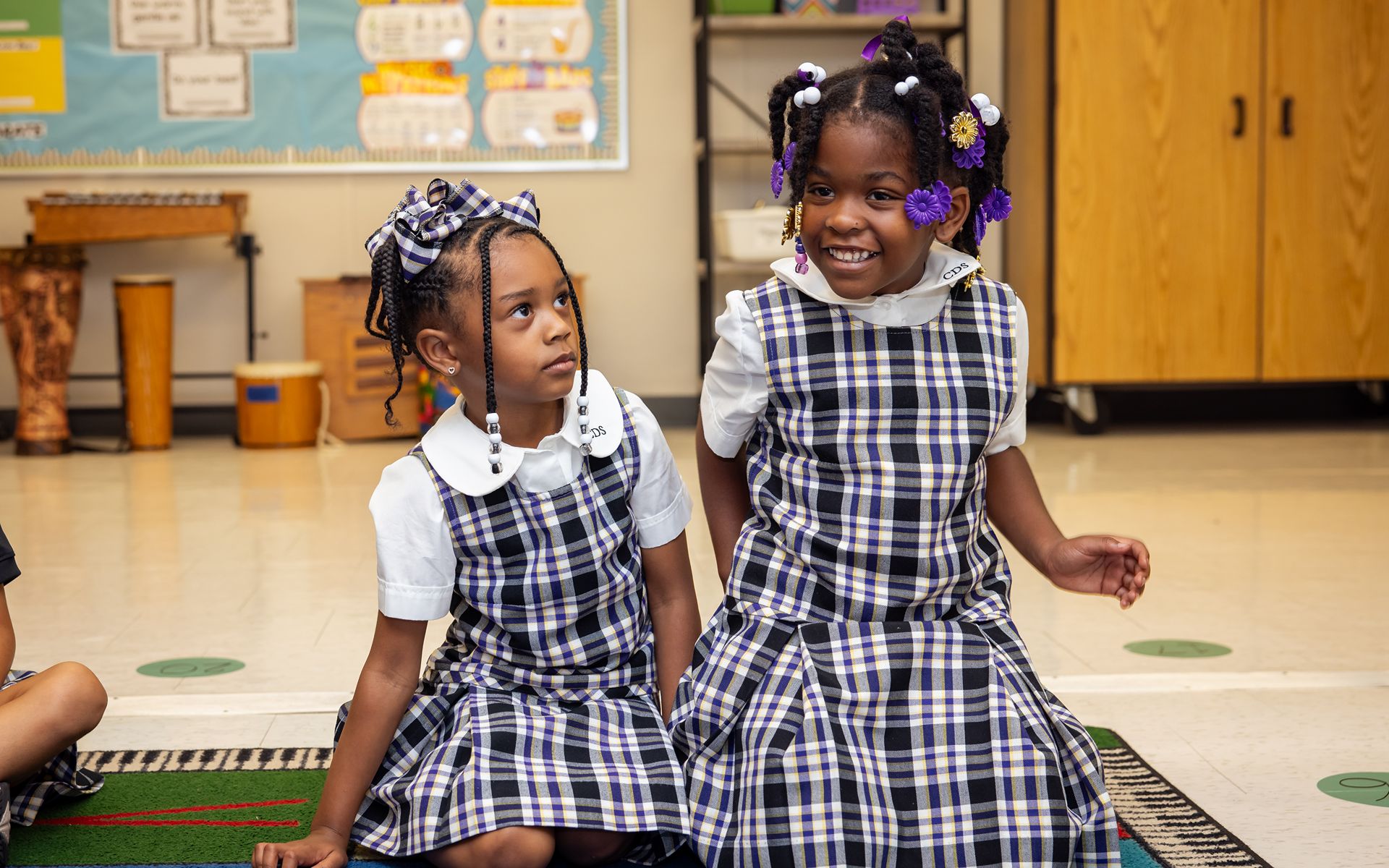
Calvary’s Lower School is dedicated to developing strong minds and Christ-centered values, laying a solid foundation for a lifetime of learning. Each morning begins with a warm welcome, prayer, and intentional routines that help students feel known, connected, and ready for the day ahead. As students grow in independence and confidence, these routines provide a consistent foundation for building relationships, developing responsibility, and learning together. In addition to core academic subjects, Lower School students participate in special classes including art, Bible, music, physical education, STEM, library, and Spanish. Hands-on learning opportunities, field trips, special visitors, and extra-curricular opportunities further enrich the Lower School experience, providing opportunities for students to learn, explore, and grow beyond the classroom.
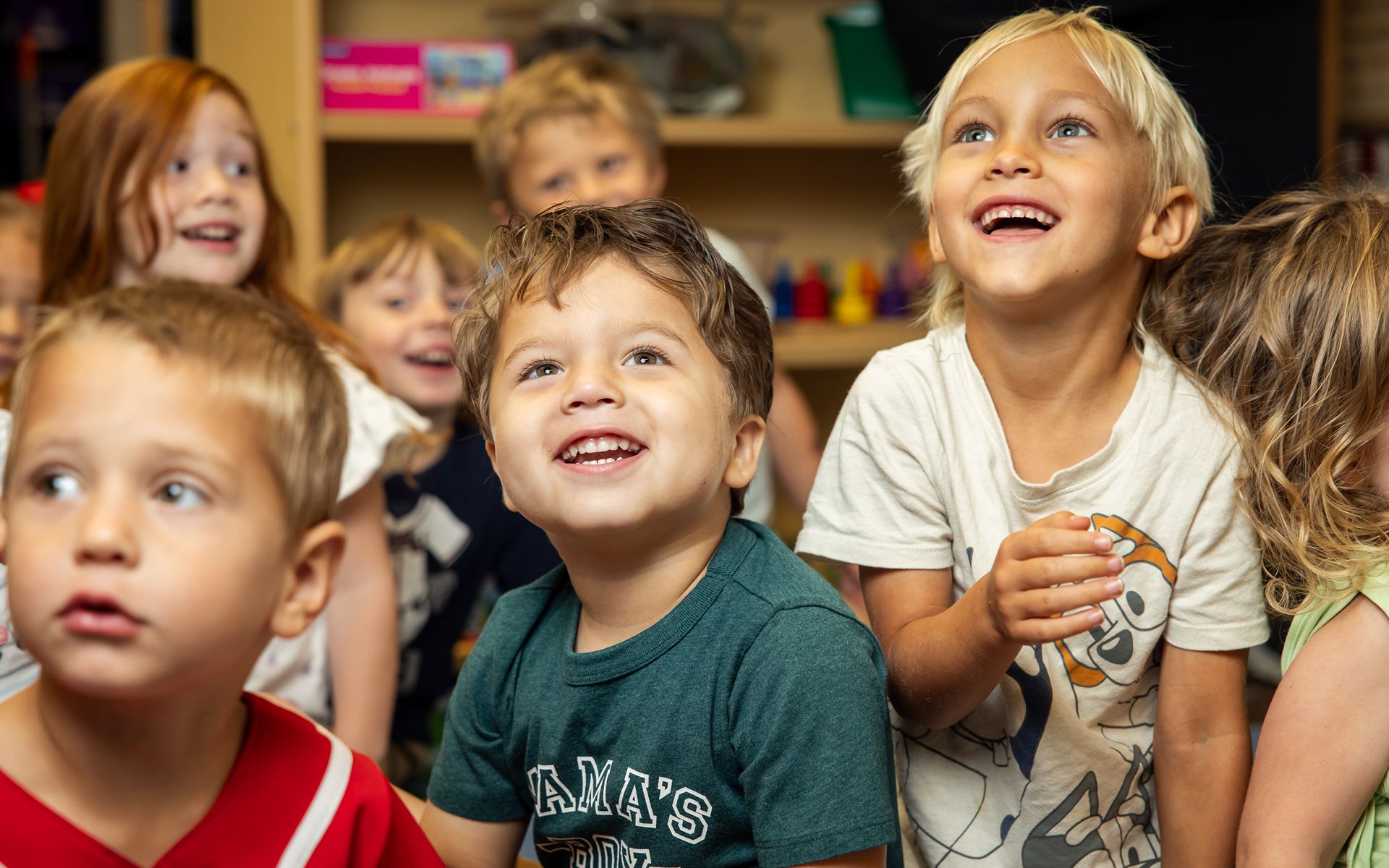
Our Pre-K program provides a nurturing, engaging environment where young learners build a strong foundation for kindergarten and beyond. Through intentional instruction, hands-on learning, and meaningful relationships, students grow academically, socially, emotionally, physically, and spiritually.
Small Class Sizes: An average class size of just 12 students, with an experienced and knowledgeable teacher and teaching assistant in each classroom, allows for individualized attention, meaningful relationships, and intentional support for every child. Our educators bring a combination of degrees, professional experience, and a passion for working with young learners to the classroom.
Strong Academic Foundation: Students receive daily targeted instruction in reading and math, building early literacy, number sense, problem-solving skills, and confidence through developmentally appropriate learning experiences.
Learning Through Play & Exploration: Hands-on activities, purposeful play, centers, and collaborative experiences encourage curiosity, creativity, independence, and a love of learning.
Daily Specials Rotations: Pre-K students enjoy instruction from teachers in art, Bible, music, physical education, STEM, library, and Spanish, providing opportunities to discover new interests and develop the whole child.
Faith-Based Learning: Biblical truth is intentionally woven throughout the Pre-K experience as students learn about God’s love, develop character, and begin building a strong foundation of faith.
Kindergarten Readiness: From classroom routines and independence to foundational academic skills, our program intentionally prepares students for the expectations of kindergarten while allowing them to learn and grow at an age-appropriate pace.
Our Kindergarten program builds on the strong foundation established in Pre-K, guiding students toward greater independence, confidence, and academic growth. As students transition into a more structured school day, they experience increased instructional time, intentional integration across content areas, and meaningful opportunities to collaborate, problem-solve, and take ownership of their learning. Through strong relationships and purposeful instruction, students continue to grow academically, socially, emotionally, physically, and spiritually as they prepare for first grade and beyond.
Small Class Sizes: An intentionally sized classroom, average of 16, allows teachers to know each student well and provide individualized attention, targeted support, and meaningful opportunities for growth. Each Kindergarten classroom is led by an experienced and knowledgeable teacher and supported with a teaching assistant in each classroom, each bringing a combination of degrees, professional experience, and a passion for working with young learners to the classroom.
Growing Academic Independence: Kindergarten students engage in increased instructional time in reading, writing, and mathematics, building fluency, comprehension, number sense, problem-solving skills, and confidence as independent learners.
Intentional Literacy Instruction: A comprehensive approach to early literacy develops phonemic awareness, phonics, reading fluency, vocabulary, comprehension, handwriting, and a growing love of reading.
Cross-Curricular Learning: Literacy, math, science, social studies, and Biblical truth are intentionally connected through inquiry-based learning, hands-on exploration, and real-world applications, helping students build background knowledge, strengthen critical-thinking skills, make meaningful connections across subjects, and develop a Christ-centered worldview.
Learning Through Exploration & Collaboration: Hands-on experiences, purposeful activities, problem-solving, and collaboration encourage curiosity, creativity, communication, and critical thinking while giving students opportunities to apply what they are learning.
Daily Specials Rotations: Kindergarten students participate in art, Bible, music, physical education, STEM, library, and Spanish, providing opportunities to explore new interests and develop the whole child.
Faith-Based Learning: Biblical truth is intentionally woven throughout the Kindergarten experience as students grow in their understanding of God, develop Christ-centered character, and cultivate a heart for worship and service.
Building Independence & First Grade Readiness: Students develop independence, responsibility, and ownership of their learning while strengthening the academic skills and classroom routines needed for a successful transition to first grade.
1st Grade: Building the Foundation
First Grade is a year of tremendous growth as students begin putting their foundational skills into action. Emerging readers become more confident readers, young writers discover their voices, and mathematicians begin explaining not just what they know, but how they know it. Through hands-on learning, strong relationships, and intentional instruction, First Grade builds confidence, curiosity, and a strong foundation for the years ahead.
Becoming Readers: First graders strengthen phonics, decoding, fluency, vocabulary, and comprehension as they experience the excitement of becoming increasingly independent readers.
Finding Their Voice as Writers: Students move from sentences to more developed pieces of writing as they learn to organize ideas, add details, strengthen handwriting, and communicate their thinking.
Making Sense of Math: Hands-on materials, visual models, number relationships, and real-world problems help students develop strong number sense and understand the “why” behind mathematics.
Learning by Doing: Exploration, experiments, centers, projects, discussion, and collaborative experiences allow students to actively engage with what they are learning.
Building Classroom Independence: First graders learn to manage routines, materials, responsibilities, and choices with increasing independence while developing confidence as learners.
Faith in Everyday Moments: Biblical truth is naturally connected to learning, relationships, and classroom experiences as students grow in their understanding of God and what it means to love and serve others.
Beyond the Core Classroom: Art, Bible, music, physical education, STEM, library, and Spanish give students opportunities to discover new interests, develop their gifts, and experience learning in different ways.
2nd Grade: Growing Independence
Second Grade is a bridge between the foundational early elementary years and the increasing independence that lies ahead. Students begin taking greater ownership of their learning, tackling more complex academic work, and using new tools to support their growth. It is also an important year of transition as students enter Calvary’s 1:1 technology environment and begin using MAP Growth assessments to help teachers better understand and support individual progress.
Growing as Confident Readers: Students continue strengthening foundational literacy skills while building greater fluency, comprehension, vocabulary, and independence. As their reading skills grow, they engage with increasingly complex texts and use reading to deepen their understanding of the world around them.
Writing with Purpose: Second graders expand their ideas, organize their writing, strengthen conventions, and begin writing for different purposes and audiences.
Thinking Like Mathematicians: Students use models, strategies, discussion, and problem-solving to deepen number sense and mathematical reasoning while learning to explain and defend their thinking.
Technology with Purpose: Second Grade marks the beginning of Calvary’s 1:1 technology experience, where students learn to use digital tools responsibly and purposefully. Technology enhances learning rather than replaces it, with students continuing to learn through handwriting, books, manipulatives, pencil-and-paper practice, hands-on experiences, conversation, and collaboration.
Understanding Individual Growth: MAP Growth begins in Second Grade, giving teachers another tool to understand each learner, monitor progress, and make informed instructional decisions.
Growing in Responsibility: Students begin managing more of their own materials, routines, assignments, and learning habits as they build independence and confidence.
Growing in Faith: Biblical truth is woven throughout the Second Grade experience, encouraging students to view their learning, relationships, choices, and the world around them through a Christ-centered lens.
3rd Grade: Making Connections
Third Grade marks an important shift from learning to read to reading to learn. As foundational skills become more secure, students begin using reading and other skills as tools to explore new ideas, build knowledge, make connections across subjects, and tackle more complex challenges. Mathematical thinking grows more sophisticated, and students learn to communicate their ideas with greater clarity and confidence.
From Learning to Read to Reading to Learn: Third graders increasingly use reading as a tool for learning across subjects. Students continue strengthening fluency, vocabulary, and comprehension while digging deeper into literature and informational texts, gathering information, making connections, and building knowledge.
Writing to Communicate: Students develop more organized and detailed writing as they plan, draft, revise, edit, and share their ideas for a variety of purposes and audiences. Cursive handwriting is introduced in Third Grade, giving students another tool for developing fluency, legibility, and confidence in written communication.
Multiplication & Mathematical Thinking: Third Grade introduces important mathematical concepts, including multiplication and division, while continuing to strengthen number sense, problem-solving, and mathematical reasoning. Students use models, strategies, and discussion to explain how and why their solutions work.
Technology with Purpose: Building on the 1:1 technology experience introduced in Second Grade, students become more independent and intentional in using digital tools for learning, research, creativity, and collaboration. Technology continues to complement, not replace, books, handwriting, pencil-and-paper practice, hands-on learning, discussion, and collaboration.
Monitoring Growth: MAP Growth assessments continue to provide teachers with meaningful information about each student’s academic progress, helping identify strengths, areas for continued growth, and opportunities for targeted instruction.
Connecting the Subjects: Learning becomes increasingly cross-curricular as students make meaningful connections among literacy, science, social studies, math, technology, and biblical truth.
Researching & Sharing What We Know: Students begin gathering information from multiple sources, organizing their thinking, and sharing what they have learned through writing, projects, discussion, and presentations.
Learning Together: Collaboration becomes an important part of the classroom as students learn to listen to different perspectives, contribute ideas, solve problems together, and communicate effectively.
Growing as Independent Learners: Students take greater responsibility for organization, assignments, classroom expectations, and learning habits while beginning to recognize their own strengths and areas for growth.
Living Out Our Faith: Students are encouraged to connect biblical truth to their relationships, choices, learning, and interactions with others as they grow in Christ-centered character.
4th Grade: Thinking Deeper
Fourth Grade challenges students to look beyond the surface. Instead of simply asking, “What is the answer?” students are increasingly challenged to consider why, how, and what if? Through more complex texts, multi-step problems, research, inquiry, and collaborative learning, students strengthen their ability to analyze information, support their thinking, and approach challenges with confidence.
Reading with Evidence: Students engage with increasingly complex literature and informational texts, learning to analyze ideas, draw conclusions, make inferences, and support their thinking with evidence from what they read.
Writing with Depth: Fourth graders strengthen organization, elaboration, vocabulary, conventions, and the use of evidence as they write across genres and content areas.
Solving Complex Problems: Mathematics becomes increasingly sophisticated as students apply conceptual understanding, computational fluency, multiple strategies, and mathematical reasoning to multi-step and real-world problems.
Technology with Purpose: Building on their growing independence with 1:1 technology, Fourth Grade students use digital tools more strategically for research, creation, collaboration, problem-solving, and communication. Students continue developing responsible digital habits while learning when technology is the right tool for the task. Digital learning remains intentionally balanced with books, handwriting, pencil-and-paper practice, discussion, hands-on experiences, and face-to-face collaboration.
Research & Inquiry: Students ask meaningful questions, gather and evaluate information, investigate topics, and communicate what they discover through research, projects, writing, and presentations.
Student Voice & Choice: As independence grows, students have opportunities to make thoughtful choices, share perspectives, set goals, and take greater ownership of how they approach their learning.
Knowing How We Grow: A combination of informal and formal classroom assessments, along with MAP Growth, provides meaningful information about student progress and helps teachers respond to individual needs. Students become more aware of their own strengths and areas for growth, set meaningful goals, and begin taking greater ownership of their learning.
Growing in Independence: Fourth Grade marks an important transition as students move from one primary classroom teacher to two teachers and begin changing classes for different areas of instruction. This intentional progression helps students strengthen organization, responsibility, adaptability, and self-advocacy as they prepare for Fifth Grade, where they learn from four teachers, and ultimately Middle School, where they transition between seven teachers throughout their day.
Faith in Action: Students are challenged to move from knowing biblical truth to putting it into action through kindness, integrity, compassion, responsibility, and service to others.
5th Grade: Ready to Lead
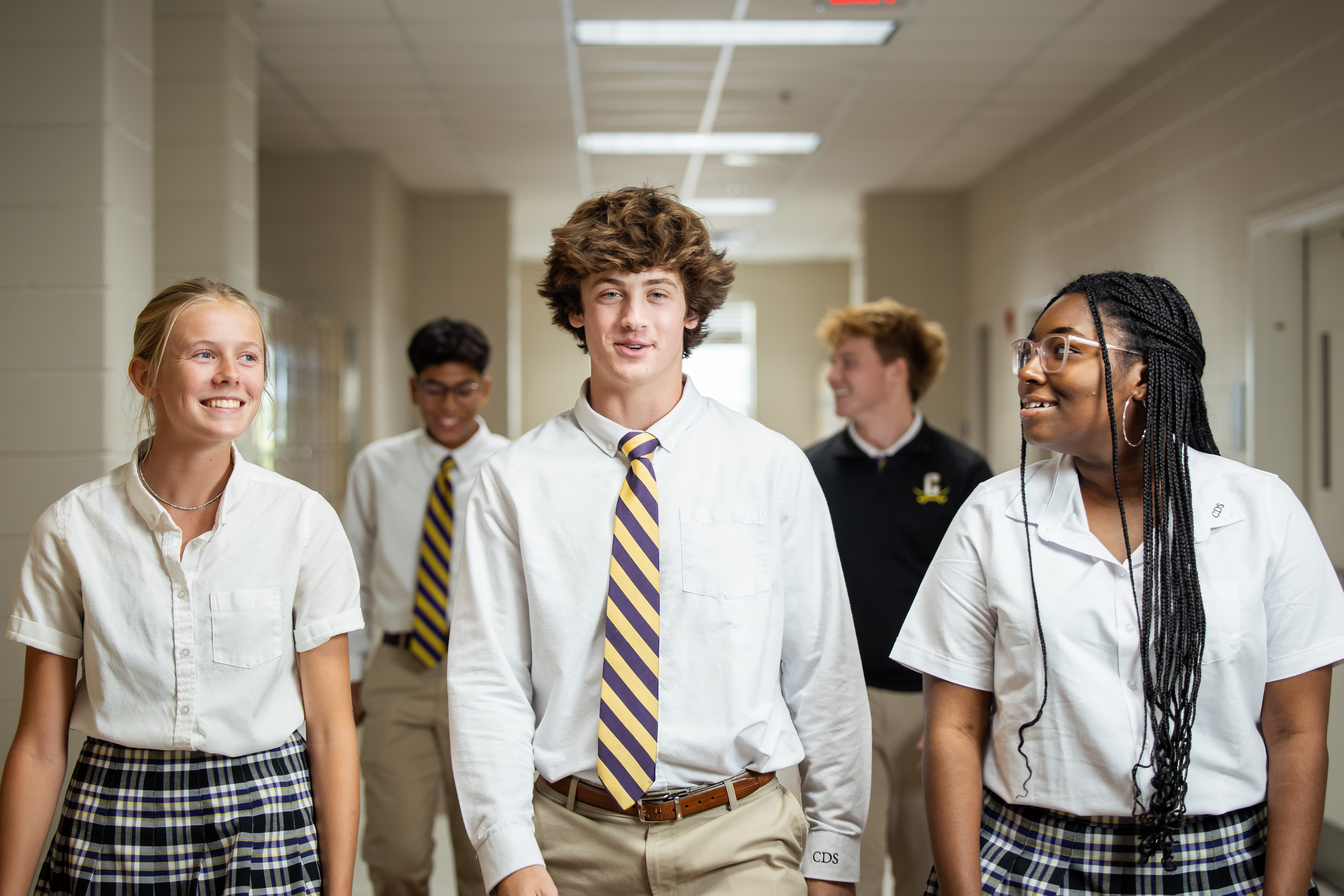
Fifth Grade is both a celebration of how far students have come and intentional preparation for where they are going next. As the leaders of Lower School, Fifth Graders are challenged to think critically, communicate confidently, manage greater responsibility, and take ownership of their learning. Academically, socially, and spiritually, students develop the skills and confidence needed to make a successful transition to Middle School.
Rising to the Academic Challenge: Fifth graders engage with increasingly rigorous texts, concepts, assignments, and problems that require them to analyze, apply, evaluate, and communicate what they know. Learning is grounded in relevance, helping students make meaningful connections between what they are learning and why it matters while building deeper motivation and academic ownership.
Communicating with Confidence: Through writing, discussion, research, collaboration, and presentations, students learn to organize their ideas, support their thinking with evidence, and communicate effectively with different audiences.
Applying Mathematical Thinking: Students bring together conceptual understanding, computational fluency, problem-solving, and mathematical reasoning to tackle increasingly complex and real-world challenges.
Technology with Purpose: Building on their experience with 1:1 technology, Fifth Grade students use digital tools with greater independence and purpose for research, creation, collaboration, problem-solving, and communication. Students learn to make thoughtful decisions about when and how technology can best support their learning while continuing to value books, handwriting, pencil-and-paper practice, hands-on experiences, discussion, and face-to-face collaboration.
Understanding Our Growth: Classroom assessments and MAP Growth provide meaningful information about student progress, helping teachers respond to individual needs while empowering students to recognize their strengths, identify areas for continued growth, set goals, and take greater ownership of their learning.
Learning Across Classrooms: Fifth Grade students transition to a departmentalized model, learning from four teachers across different content areas. Moving between classrooms and adapting to different teachers, expectations, and routines strengthens organization, responsibility, flexibility, and self-advocacy while preparing students for the seven-teacher structure they will experience in Middle School.
Independent Learning: Students take greater responsibility for managing assignments, materials, deadlines, organization, and academic goals while developing the executive-functioning skills needed for Middle School.
Learning Beyond One Subject: Research, projects, inquiry, and hands-on experiences encourage students to draw connections among literacy, mathematics, science, social studies, technology, and biblical truth rather than viewing subjects in isolation.
Leadership & Service: As the oldest students in Lower School, Fifth Graders have opportunities to model responsibility, encourage younger Cavaliers, contribute to their school community, and discover how their individual gifts can be used to serve others.
Preparing for Middle School: Increased independence, organization, self-advocacy, responsibility, collaboration, and academic stamina help students prepare for the expectations and opportunities of Middle School.
Developing a Biblical Worldview: Students are encouraged to consider how biblical truth shapes the way they think, learn, lead, serve, make decisions, and interact with the world around them.
Meet the Team
Our Lower School teachers are experienced educators who understand how children learn best during these foundational years. They combine strong academic instruction with encouragement and care, helping students build confidence, curiosity, and a love of learning that will serve them for years to come.